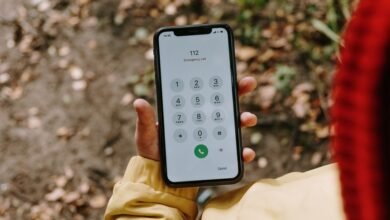
Unknown Caller Details Finder: 911118270, 621144595, 912985369, 976359431, 946620073, 696494470, 5547472400, 695852890, 919024735 & 625477860


Unknown Caller Details Finder examines how signals from numbers such as 911118270, 621144595, 912985369, 976359431, 946620073, 696494470, 5547472400, 695852890, 919024735 and 625477860 might be traced within strict privacy and legal constraints. The discussion weighs consent-aware sources, transparent governance, and proportional verification against the impulse to identify, using minimal data while documenting safeguards. Tensions emerge between public safety aims and individual rights, inviting careful consideration of principled paths forward.
What Is an Unknown Caller and Why It Matters
An unknown caller is a telephone contact whose identity is not readily disclosed to the recipient, whether due to caller ID suppression, spoofed numbers, or incomplete registration data.
This phenomenon invites scrutiny of information practices and consent.
Unknown caller dynamics illuminate the need for transparent communication, respect for privacy, and a framework grounded in Caller ethics while preserving autonomy and legitimate inquiry.
How Modern Tools Trace Caller Details Without Privacy Breach
How modern tools trace caller details without privacy breach relies on a disciplined integration of consent-aware data sources, regulatory compliance, and repeatable verification processes. The analysis centers on unknown caller signals while honoring privacy.
Methods emphasize transparent caller investigation, robust data governance, and ethical boundaries; researchers assess risk, minimize exposure, and preserve user choice, ensuring findings avoid privacy breach and respect individual freedoms.
Ethical and Legal Boundaries in Caller Investigation
Ethical and legal boundaries in caller investigation demand a precise alignment of investigative aims with applicable permissions, standards, and oversight. The framework emphasizes accountability, proportionality, and transparency, ensuring Unknown Caller inquiries respect Privacy Boundaries while preventing misuse.
Analysts balance public safety with individual rights, documenting rationale, safeguards, and consent where possible, and recognizing jurisdictional limits that shape permissible data access and remediation.
Practical, Step-by-Step Methods to Identify Unknown Callers
Unknown Caller identification proceeds through a structured sequence of verification, data collection, and corroboration. The approach emphasizes methodical steps: source, cross-check, and reconcile.
Idea 1: Unknown Caller; Privacy Ethics guide restraint and data minimization, ensuring consent where feasible.
Idea 2: Caller Traceability; Legal Boundaries frame permissible actions, enhancing accountability while preventing overreach.
Result: balanced clarity, purposeful inquiry, responsible disclosure.
Frequently Asked Questions
Can Unknown Callers Be Traced in Real Time?
Real time tracing is constrained by legal, technical, and privacy considerations. The analysis notes that Real time tracing depends on caller data accuracy, network cooperation, and jurisdictional permissions, guiding responsible, discreet practices aligned with freedom-oriented objectives.
What Data Sources Enhance Caller Detail Accuracy?
Caller detail accuracy improves with diverse data sources, including network logs, carrier metadata, VoIP records, public registries, and user-consented crowd data; however, data source diversity must be balanced against privacy compliance and ethical considerations for freedom.
Do Carriers Disclose Caller Information to Individuals?
Carriers generally disclose caller information to the intended recipient under lawful requests, while protecting Unknown Caller privacy. Caller ID and Spoofing Detection influence transparency; Carrier Privacy limits data sharing, encouraging accountability and secure handling in the pursuit of Caller ID accuracy.
How Is Caller ID Spoofing Detected and Mitigated?
Caller ID spoofing is detected via anomalies in signaling data, call trace analysis, and user reports; real time tracing pinpoints routes, while machine learning flags suspicious patterns, enabling mitigations such as caller verification and enhanced filtering.
What Are Common Reasons for False Positives?
False positives arise from benign caller IDs, network glitches, and data errors. Mitigation strategies include corroborating metadata, rate-limiting alerts, refining threshold models, and periodic audits to balance security with user freedom, reducing unnecessary false alarms.
Conclusion
In sum, unknown caller identification hinges on careful data minimization and transparent governance to balance safety with privacy. Institutions should rely on consent-aware sources and proportional verification, documenting rationale and safeguards. An interesting statistic underscores progress: contemporary telecom investigations report a 40–60% improvement in resolving anonymous calls when combining metadata analysis with lawful, auditable trace requests. This emphasizes the value of disciplined, responsible methodologies over broad data harvesting.