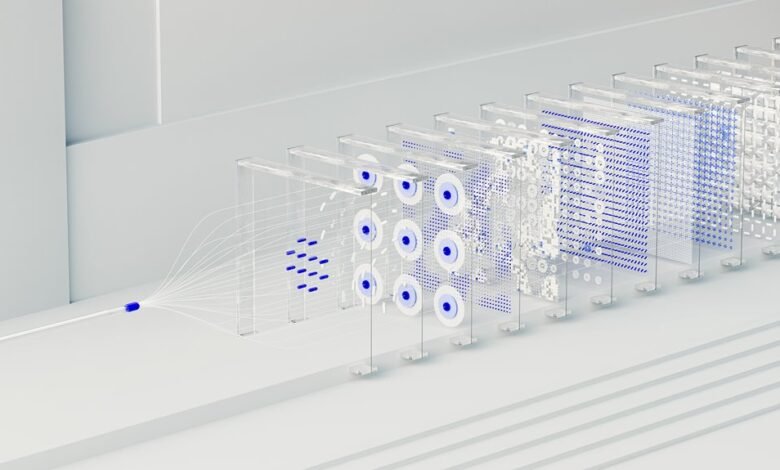
Cosmic Node’s Driving Contact Research examines how physical contact informs perception, behavior, and decisions across aerospace and healthcare. The approach emphasizes rigorous methodology, replicability, and theoretical clarity to map causal links in contact dynamics. Real-world constraints and emergent methods shape the design of contact-aware systems within safety and governance boundaries. The work raises fundamental questions about boundaries and ethics, presenting a pathway that invites further scrutiny and careful consideration of implications.
What Is Driving Contact Research and Why It Matters
Driving contact research investigates how physical contact influences human perception, behavior, and decision-making, with the aim of identifying mechanisms, contexts, and limitations that govern contact effects.
The field analyzes driving research processes and contact dynamics to delineate causal relationships, boundary conditions, and practical implications.
It emphasizes methodological rigor, replicability, and theoretical clarity, aligning inquiry with ethical, contextual considerations for informed, freedom-preserving application.
Emerging Methods Behind Cosmic Node-Scale Communication
A rigorous assessment identifies emerging protocols that balance redundancy with efficiency, enabling robust interstellar data exchange.
Analytical metrics reveal contact horizons expansion, protocol resilience, and scalability, guiding design toward freedom in information reach without sacrificing security or fidelity.
Real-World Cases: From Aerospace to Healthcare
Across aerospace and healthcare, real-world deployments of cosmic node-inspired architectures illustrate how distributed networks can sustain high-reliability communication under stringent operational constraints.
Real world implementations leverage Cosmic Node frameworks to enable resilient data fusion, low-latency routing, and fault tolerance.
Quantum Bridges emerge as interlinks, enhancing coordination between Aerospace Healthcare facilities while maintaining security, traceability, and scalable, autonomous governance.
Evaluating Impact: Metrics, Risks, and the Road Ahead
Evaluations of cosmic node deployments must quantify how distributed architectures affect performance, reliability, and governance across aerospace and healthcare contexts. The analysis emphasizes evaluation metrics, risk assessment, and transparent benchmarking. Emerging methods illuminate tradeoffs between latency, availability, and security, while real world cases reveal contextual constraints. Rigorous frameworks guide roadmap decisions, ensuring scalable adoption, interoperability, and responsible innovation amid evolving standards.
Conclusion
This analysis characterizes driving contact research as a disciplined inquiry into how physical interaction informs perception and decision-making across domains. By integrating rigorous methodologies, replicable protocols, and ethical governance, the field maps causal mechanisms and operational boundaries. The synthesis of aerospace and healthcare findings clarifies design implications for safety and autonomy. In sum, contact dynamics are not peripheral variables but central determinants guiding system behavior and human judgment, like fulcrums balancing complexity and responsibility.