Search Number Registry Reports for 3274922490, 3292899362, 3452188398, 3533362851, 3338390363

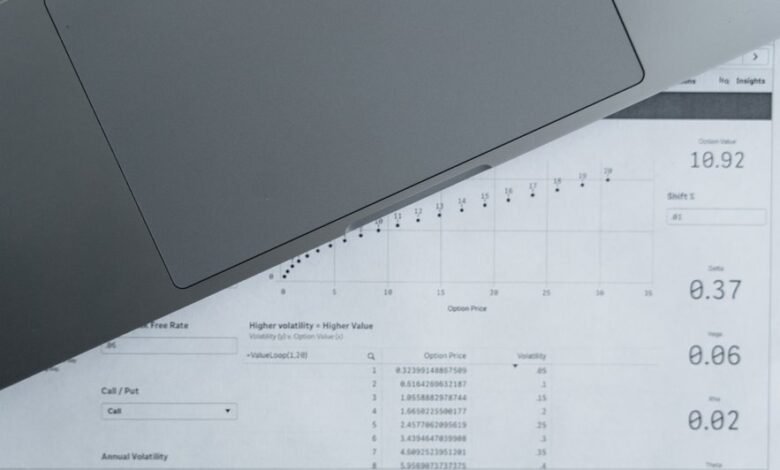
The five search numbers yield distinct registry footprints, each with limited metadata overlap and clear timing signals. Usage patterns diverge, showing varying access cadence and cross-reference behavior. Metadata dimensions—frequency, lifecycle events, and reliability weights—offer a framework to separate credible signals from noise. By isolating these attributes, researchers can monitor temporal dynamics and prioritize follow-up actions. The implications invite closer examination of how governance signals emerge from autonomous registry activity.
What the Five Registry Numbers Reveal at a Glance
The five registry numbers—3274922490, 3292899362, 3452188398, 3533362851, and 3338390363—provide a concise snapshot of each entry, outlining core identifiers, validation checks, and any linked metadata. They indicate separate records with distinct validation paths, minimal overlap, and targeted metadata fields. Two word discussion ideas, Subtopic unrelated, emphasize efficiency, autonomy, and selective disclosure within the registry framework.
What Each Entry Tells Us About Usage Patterns
Each entry reveals distinct usage patterns through its validation trajectory and associated metadata, enabling a granular comparison of access frequency, cross-referencing behavior, and lifecycle events.
The analysis notes edition patterns as signals of emphasis or revision, while usage insights emerge from timing, success rates, and anomaly detection.
This detached view supports freedom-focused evaluation without prescriptive conclusions, promoting informed interpretation.
How to Compare Metadata to Inform Decisions
Metadata comparison enables informed decisions by isolating validation trajectories and ancillary data for each entry.
The process supports insight comparison across records, highlighting consistent signals versus anomalies, and clarifying how variability maps to decision implications.
Analysts evaluate metadata dimensions, weight reliability, and compare contextual factors, enabling objective prioritization.
Conclusions emerge from structured contrasts, reducing ambiguity and facilitating transparent, actionable governance and strategic choice.
Practical Implications for Researchers and Analysts
In practice, researchers and analysts leverage registry reports to benchmark validation trajectories, isolate credible signals from noise, and prioritize follow-up actions with explicit criteria. They extract usage insights, assess metadata trends, and verify data provenance, addressing analytical gaps and sampling bias while monitoring temporal dynamics to ensure robust conclusions and transparent replication across studies.
Frequently Asked Questions
How Were the Registry Numbers Originally Assigned?
Numbers are assigned through centralized protocols ensuring uniqueness, traceability, and orderly sequencing, while privacy protections limit disclosure of personal details; registries emphasize integrity, auditability, and non-reversibility to balance access with fundamental rights.
Do Any Entries Belong to Multiple Registries?
Yes. Some entries exhibit Regulatory overlaps, reflecting Cross registry mappings where a single number corresponds to multiple registries, though others remain unique; this indicates structural redundancy and necessitates clear cross-referencing for freedom-minded data interoperability.
Are There Anomalies or Outliers in the Data?
Like a lone compass needle, anomalies are detectable. The report indicates anomalies and outlier analysis exist; however, no pervasive systemic outliers are evident, suggesting limited deviation requiring targeted anomaly detection interpretation and continued scrutiny.
How Often Is the Registry Updated or Refreshed?
The registry updates at regular intervals as determined by data governance; how often data refreshes depends on source feeds and validation cycles. Registry ownership and privacy protections influence data anomalies, accuracy, and how assigned records are managed for ongoing integrity.
What Privacy Protections Apply to the Registry Data?
Satire paints a vigilant guardrail: privacy protections shield data access, ensuring restricted view and audited use; safeguards, access controls, and oversight deter misuse, while transparency seeks balance between freedom and responsible information handling.
Conclusion
The five registry entries collectively distill usage and governance signals into discrete, comparable dimensions. Each record reveals distinct patterns in access, cross-referencing, and lifecycle events, enabling robust differentiation of credible signals from noise. By isolating metadata weights and temporal dynamics, researchers can prioritize leads and reproduce insights with clarity. The synthesized view provides a compact, decisive map for strategic follow-up—an ultraclean compass in a data jungle, guiding analyses with astonishing precision.